Crumb & Crust Forensics
Read the Bake Before Changing It
When a batch of muffins or a loaf of quick bread emerges looking nothing like the photograph in your cookbook, resist the urge to scribble random edits in the margin. Every physical trait of a finished bake—the angle of the crown, the thickness of the bottom crust, the shape of the air cells—records a specific physical event that happened between bowl and cooling rack. By examining the cooled crumb systematically, you can isolate whether the culprit was mechanical mixing, chemical balance, or thermal transfer.
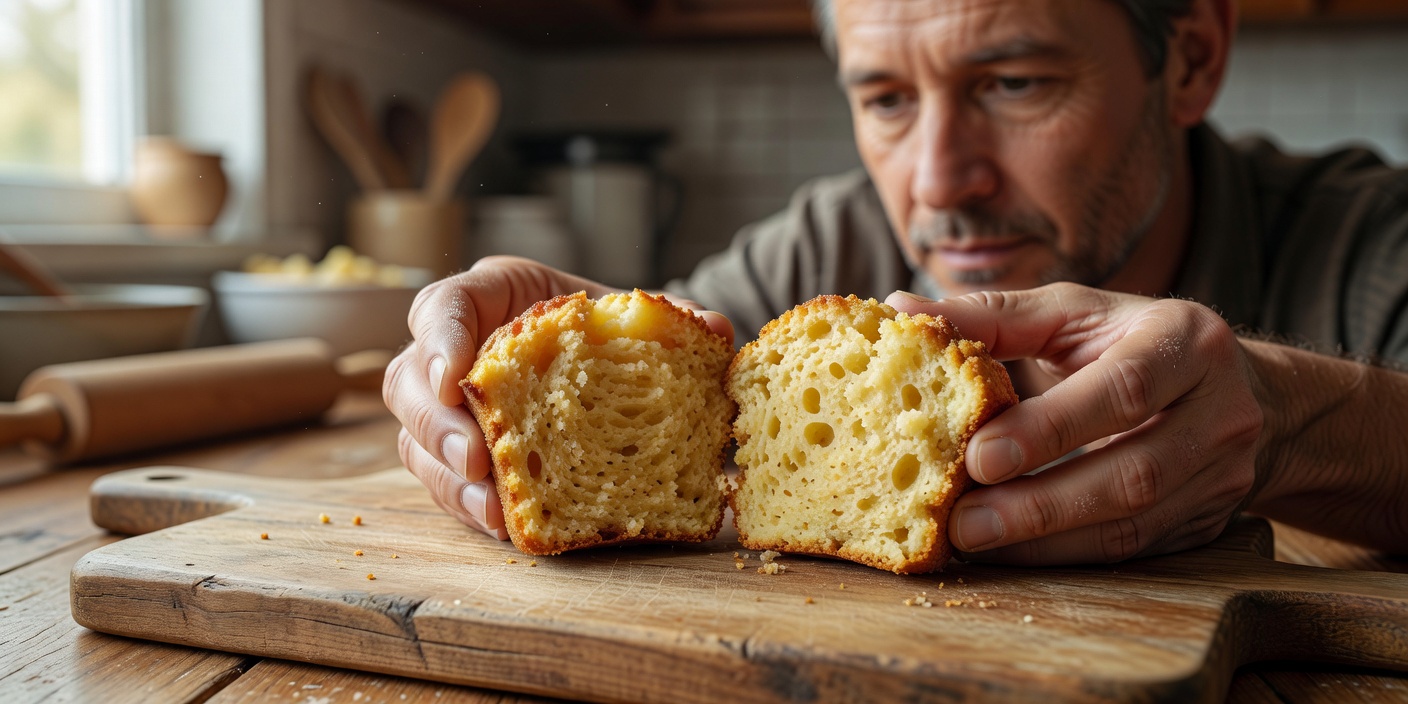
1. Tunneling, Peaked Crowns, and Tough Bite
Slice your muffin vertically from peak to base. If you see smooth, elongated air channels curving upward toward a sharp central point—often accompanied by a pale, matte exterior crust—you are looking at classic gluten over-development in a lean batter.
In the traditional "muffin method" popularized by Fannie Farmer and refined by King Arthur Baking Company test kitchens, liquid ingredients are poured into dry ingredients and folded with a broad spatula in 12 to 15 strokes. If the batter is beaten until completely smooth, gliadin and glutenin proteins hydrate and align into elastic strands. During baking, expanding steam and carbon dioxide cannot break gently through a tender starch matrix; instead, gas follows the path of least resistance along those elastic protein corridors, boring tunnels to the center peak.
Evidence vs. Hypothesis: Tunneling
- Confirmed Clue: Batter looked glossy and ribboned off the spoon before scooping; interior shows long vertical holes rather than round cells.
- Ruled Out: Too much baking powder (excess leavener causes coarse, crumbling open crumb and a collapsed center, not smooth tunnels).
- Next Batch Adjustment: Stop folding while streaks of dry flour still show; scooping into the tin completes the final 10% of mixing. Or switch to the reverse-creaming method, coating flour in softened butter before adding liquid.
2. Sunken Centers, Mushroom Overflows, and Gummy Bottoms
A muffin that rises gloriously at minute 12 only to cave into a wrinkled crater by minute 20 suffered a mismatch between gas inflation and structural coagulation. Compare these three structural symptoms:
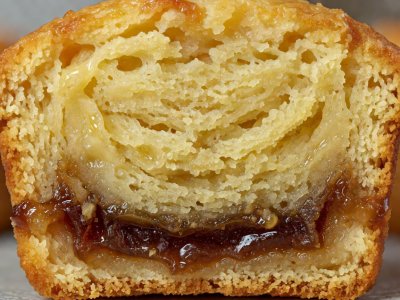
Water-Heavy Fruit or Emulsion Split
A rubbery, translucent line at the bottom indicates free liquid separated from the batter before starch gelatinized at 140°F–165°F. Common when cold eggs curdle creamed butter or thawed frozen berries bleed juice into the bowl.
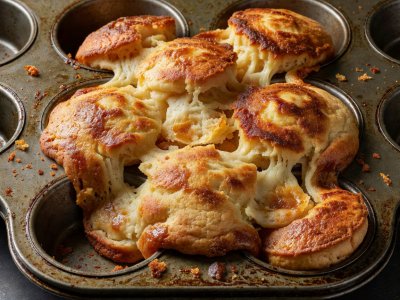
Excess Sugar or Weak Flour Ratio
Sugar tenderizes by delaying protein coagulation. If sugar exceeds flour by weight in a high-fat muffin, the batter liquefies in the oven and flows horizontally across the tin deck before the outer crust can set and push upward.
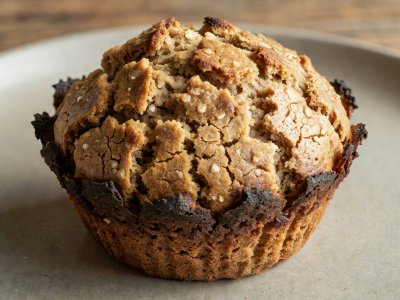
Excess Flour by Volume Scoop
Dipping a measuring cup into a flour canister packs up to 30% extra starch into the bowl. Simultaneously, an oven running hot sets the outer shell in 6 minutes; when the core finally expands, it rips through the rigid crust.
3. Pale Crusts, Bitter Aftertastes, and Crumb Matrix Comparison
Sometimes the shape looks passable, yet the flavor or color feels off. Use this diagnostic reference table to match sensory observations to their root chemical or thermal mechanism, grounded in Shirley Corriher's BakeWise research on batter pH.
| Observed Symptom | pH / Thermal Mechanism | How to Verify | Single-Variable Fix |
|---|---|---|---|
| Soapy, metallic, or bitter finish; greenish-gray tint around blueberries | Alkaline batter pH (>7.5) from unneutralized sodium bicarbonate (baking soda). Anthocyanin pigments in berries turn greenish-blue in alkaline environments. | Check recipe acid ratio: 1/2 tsp baking soda requires roughly 1 cup buttermilk, yogurt, or 1 tbsp lemon juice. | Reduce baking soda by half and replace leavening power with double-acting baking powder (at 3x the weight of removed soda). |
| Pale blonde top even when internal temperature reaches 205°F | Acidic batter pH (<6.0) inhibits Maillard browning reactions between amino acids and reducing sugars. | Taste crumb for sharp tang; check if recipe uses light glass or insulated baking pans. | Add 1/8 tsp baking soda to raise pH slightly, or brush tops with a touch of milk or sprinkle coarse turbinado sugar before baking. |
| Muffin feels moist at 1 hour, bone-dry and sandy at 18 hours | 100% butter fat solidifies at room temperature, amplifying the perception of starch retrogradation. | Warm a 1-day-old half in the microwave for 8 seconds; if it turns soft again, butter crystallization is the culprit. | Split the fat: use 60% melted butter for flavor and 40% neutral vegetable or olive oil, which stays liquid at room temperature. |
"Never adjust flour, liquid, and oven temperature all at once. If the next batch improves, you still won't know which lever saved it."
Comparing Internal Crumb Temperatures with an Instant-Read Probe
Observation Question: Have you ever pulled a batch of pumpkin or zucchini muffins out when a toothpick came out clean, only to find them dry once cooled? High-sugar, spice-heavy batters keep cooking from residual carryover heat. Try pulling one test muffin at 200°F (93°C) internal temperature and another at 208°F (98°C), cool both for 45 minutes, and compare crumb softness.