Functional Pantry Chemistry
What the Replacement Must Do
Most internet substitution charts fail home bakers because they treat ingredients as flavor tokens rather than structural building blocks. A chart might claim you can swap unsweetened applesauce 1-for-1 for vegetable oil in spice muffins. In practice, oil is 100% lipid that coats flour proteins to keep them short and tender, while applesauce is roughly 88% water and 2% pectin—which hydrates gluten aggressively and turns your muffin bouncy and cake-like.
Before making a swap, ask one question: what mechanical job is the missing ingredient doing in this specific recipe?
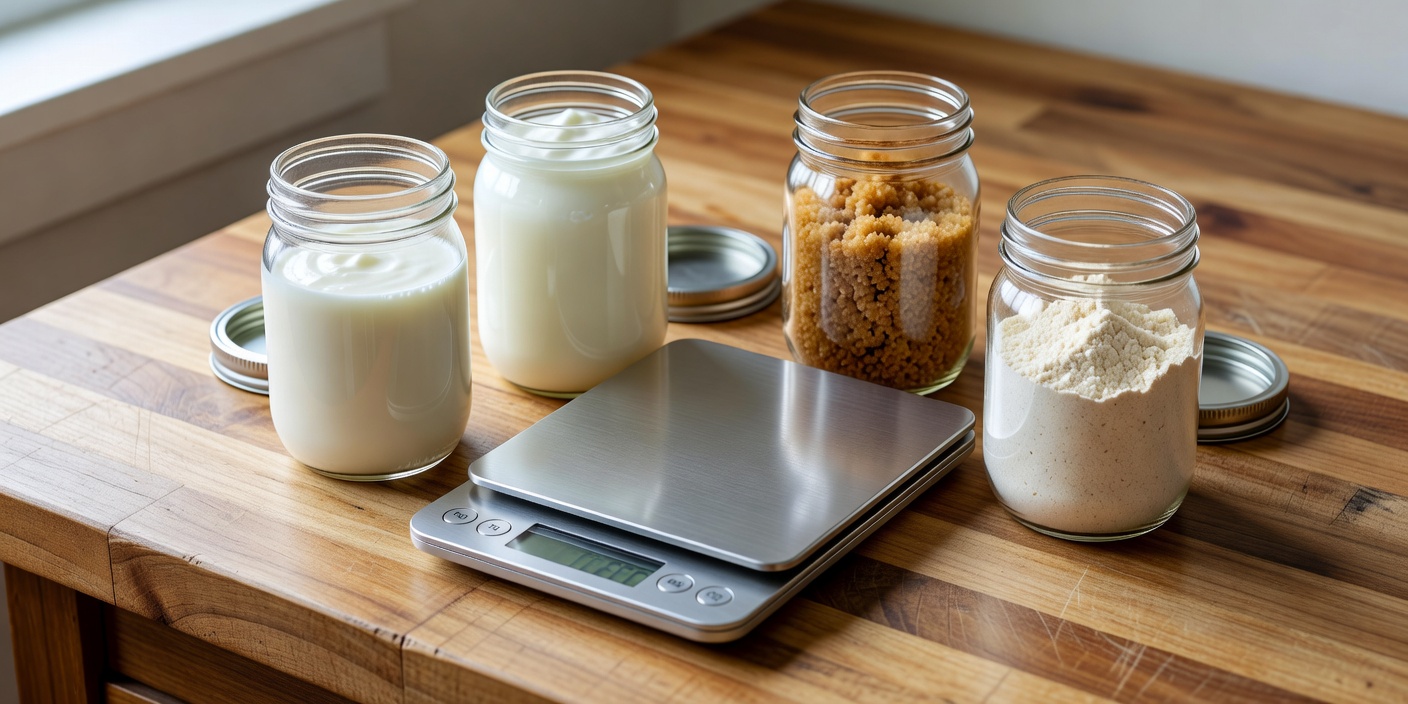
1. The Four Pillars: Tougheners, Tenderizers, Moisteners, and Dryers
Professional pastry chefs classify every item on the counter into four functional groups, a framework standardized by the American Institute of Baking (AIB) and culinary educators like Wayne Gisslen:
- Structure Builders (Tougheners): Flour proteins (glutenin and gliadin), egg whites, and starches as they gelatinize. Without them, the muffin collapses after rising.
- Tenderizers: Fats (butter, oil, lard), sugars, egg yolks, and chemical leaveners. They interfere with protein bonding and shorten gluten strands.
- Moisteners: Water, milk, buttermilk, liquid sugars (honey, maple syrup), and whole eggs. They dissolve dry leaveners, activate starch gelatinization, and generate steam.
- Dryers: Flours, cocoa powder, milk solids, and cornstarch, which absorb free water during baking and cooling.
"When you swap an ingredient, match its water weight and its fat weight first. Flavor is the easiest part to adjust; hydration balance is what saves the crumb."
2. Cultured Dairy, Acid Balance, and Fat Swaps
Muffin recipes love cultured dairy—buttermilk, sour cream, and Greek yogurt—because their thick viscosity suspends berries while their lactic acid reacts immediately with baking soda to create tenderizing carbon dioxide gas. Here is how common kitchen swaps alter the batter:
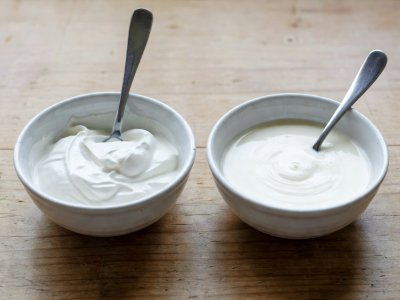
Match Viscosity Before Folding
Low-fat cultured buttermilk is ~90% water, whereas strained Greek yogurt is ~75%–80% water. Swapping Greek yogurt straight across makes a stiff batter that bakes up dry. Whisk 180g Greek yogurt with 60g water or milk to match 240g buttermilk.
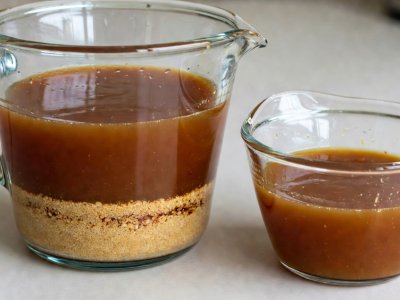
Replace the Boiled-Off Water
American stick butter contains 16% to 18% water. When you brown 113g (1 stick) of butter in a skillet, that water boils away, leaving roughly 92g of anhydrous fat and toasted milk solids. Add 1 tablespoon (15g) of water or milk back into the bowl so your flour isn't starved of moisture.
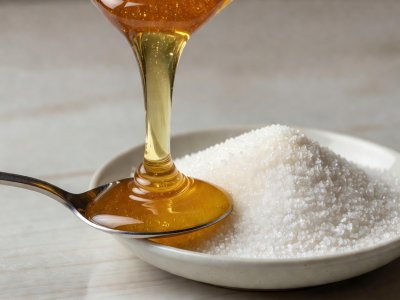
Account for Hygroscopic Fructose & Acid
Honey is roughly 17% water, acidic (pH ~3.9), and rich in fructose, which browns at a significantly lower temperature than sucrose. Reduce other liquids in the recipe by 20g per 100g of honey used, add 1/8 tsp baking soda, and drop oven heat by 15°F to prevent scorched tops.
3. Complete Functional Substitution Reference Matrix
Use weights in grams whenever possible. This table is tested specifically on standard 12-cup muffin and 8.5x4.5-inch quick bread formulas.
| Missing Ingredient (100g base) | Functional Composition | Best Structural Replacement | What Changes in the Finished Bake |
|---|---|---|---|
| 1 Large Whole Egg (50g without shell) | 37g water, 6.5g coagulating protein, 5g emulsifying yolk lipid | 35g water + 10g neutral oil + 5g baking powder (or 1 tbsp ground flaxseed simmered in 3 tbsp water for 3 min) | Flax egg yields slightly denser, nuttier crumb with ~15% lower dome height; avoid swapping more than 2 eggs in a single recipe. |
| Unbleached All-Purpose Flour (100g) | ~11% gluten-forming protein, ~72% starch | Cake Flour: use 100g + reduce sugar by 5g. Gluten-Free 1:1 Blend (with xanthan gum): use 100g + add 10g liquid and rest batter 20 min. | Rice/sorghum starches in GF blends absorb water slowly; resting the batter eliminates the gritty mouthfeel common in GF muffins. |
| Unsweetened Natural Cocoa Powder (50g) | Acidic (pH 5.3–5.8), high starch content, 10–12% cocoa butter | Dutch-Process Cocoa (50g) — only if recipe uses baking powder. If recipe relies on baking soda, add 1/4 tsp cream of tartar. | Dutch cocoa gives a deep mahogany color and smooth chocolate flavor without sharp fruitiness, but will not react with baking soda alone. |
| Dark Brown Sugar (100g) | 90% sucrose, ~10% molasses (water, invert sugars, mild acid) | 90g white granulated sugar + 10g unsulfured molasses (no need to mix ahead; add molasses with wet ingredients). | Identical moisture retention and caramel notes. Do not substitute raw turbinado sugar 1:1—its large crystals fail to dissolve in short muffin bake times. |
Pre-Swap Sanity Checklist
- Did my swap add or remove more than 15 grams of water across the whole bowl?
- Did my swap remove an acidic ingredient (brown sugar, buttermilk, natural cocoa) that baking soda needed to bubble?
- Did I switch from a solid creamed fat (butter) to a liquid fat (oil), losing the air bubbles normally beaten in during the creaming step?