Controlled Kitchen Trials
Change One Thing with Purpose
The fastest way to grow as a home baker isn't collecting 50 different blueberry muffin recipes—it is taking one solid base formula and running split-batch trials in your own kitchen. Because a standard recipe makes 12 muffins, you can easily divide a single bowl of batter into two 6-cup pans to test how resting time, cup spacing, or flavor infusions behave under identical oven conditions.
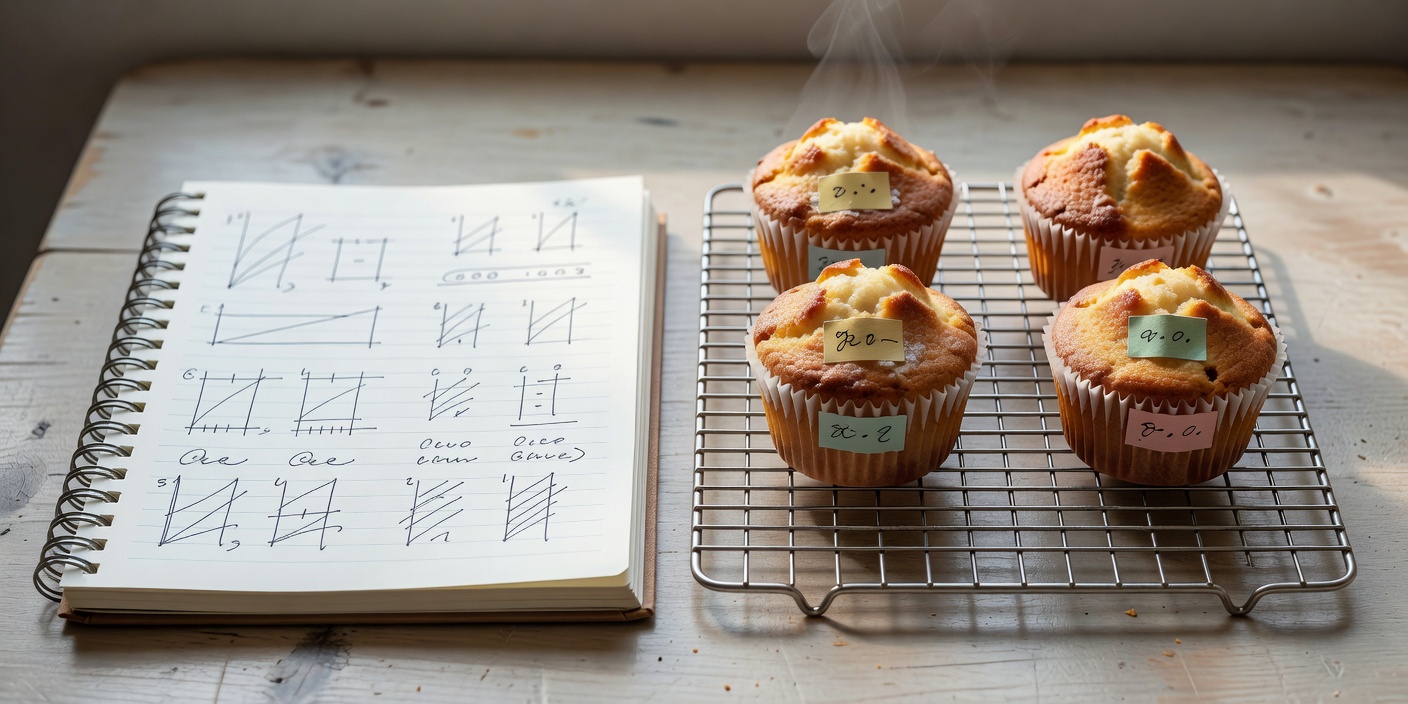
The Golden Rule of Split-Batch Testing
As J. Kenji López-Alt and Rose Levy Beranbaum (author of The Cake Bible) demonstrate, human sensory memory across different days is remarkably unreliable. We remember last Sunday's muffin as fluffier or sweeter depending on our mood or the weather. When you bake Control A and Variable B on the same afternoon from the same bag of flour, your eyes and palate can detect a 10% shift in crumb tenderness immediately.
"Don't trust memory from last Tuesday's batch. Split one bowl of batter today, change a single variable in half of it, and taste them side by side on the same plate."
Three Repeatable Saturday Morning Experiments
Each of these trials uses a single batch of batter divided into two 6-cup tins. Grab a ruler, a kitchen scale, and your notebook.
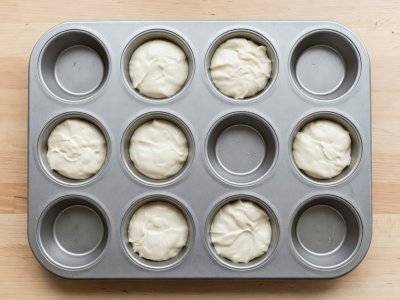
Checkerboard Spacing vs. Full 12-Cup Tin
Hypothesis: Filling every other cavity (6 muffins per 12-cup pan) allows hot convective air to circulate between the metal cups and over the deck, boosting initial oven spring and crust browning.
What to Measure: Compare crown height in millimeters and check whether the inward-facing sides of the crowded pan stay paler than the checkerboard pan.
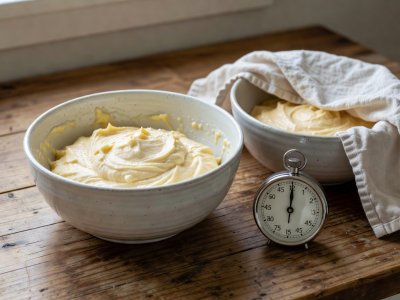
Immediate Bake vs. 45-Minute Fridge Rest
Hypothesis: Resting mixed batter lets flour starch granules absorb free water fully while relaxing any gluten strands formed during folding, increasing batter viscosity so domes rise straight up instead of spreading.
What to Measure: Scoop Control A and bake immediately. Cover Variable B for 45 minutes in the fridge, then scoop and bake. Compare dome curvature and crumb velvetiness.
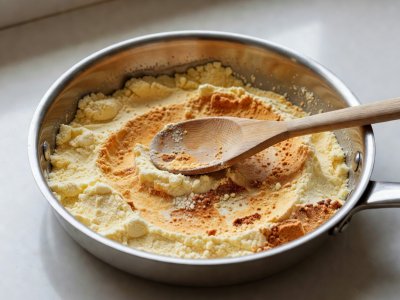
Adding 20g Toasted Milk Powder
Hypothesis: Because butter is mostly fat with only ~1.5% milk solids, toasting 20g of nonfat dry milk powder in a dry skillet until golden brown and whisking it into the dry ingredients adds deep caramel aroma without changing hydration.
What to Measure: Blind taste test after 3 hours of cooling—note how toasted milk solids amplify vanilla, nutmeg, and roasted nut notes.
Flavor Pairing & Structural Impact Log
When experimenting with flavor additions—citrus zests, espresso powder, mashed fruit, or toasted spices—remember that aromatics also carry chemical baggage. Review these tested ratios before adjusting your base recipe:
| Flavor Experiment | Recommended Usage Rate | Chemical / Structural Side Effect | Best Technique for Maximum Aroma |
|---|---|---|---|
| Citrus Zest (Lemon, Blood Orange, Yuzu) | 8g to 12g finely grated zest per 250g flour batch | Zero impact on pH or hydration (unlike citrus juice, which thins batter and alters acid balance). | Rub zest vigorously into granulated sugar with your fingertips for 2 minutes before mixing; sugar crystals rupture oil glands and trap volatile limonene. |
| Roasted Fruit Purees (Banana, Pumpkin, Apple) | 180g to 220g per 250g flour batch | High pectin and bound water trap steam, delaying crumb set and risking a gummy center. | Simmer or microwave puree for 4 minutes to reduce water weight by 20% and caramelize natural sugars before cooling and folding into batter. |
| Whole Grain Swaps (Rye, Buckwheat, Khorasan) | Replace 25% to 40% of all-purpose flour by weight | Pentosan gums in rye and lack of gluten in buckwheat alter water absorption and reduce elasticity. | Toast whole grain flour on a dry sheet pan at 325°F for 8 minutes, cool completely, and whisk into dry mix for a roasted, nutty profile. |
How to Score Your Split-Batch Results
When comparing two test halves at your kitchen table, score four clear traits from 1 to 5 rather than writing a vague "good" or "bad":
- Crown Geometry: Flat/sunken (1) vs. High, symmetrical dome with delicate cracks (5).
- Crumb Cell Uniformity: Elongated tunnels or basal gum line (1) vs. Even, fine-to-medium open cells (5).
- First-Day Tenderness: Chewy/rubbery bite (1) vs. Plush, clean-shearing crumb (5).
- Day-Two Moisture (24h in airtight tin): Dry/sandy (1) vs. Moist with crisp re-toasted top (5).